Science
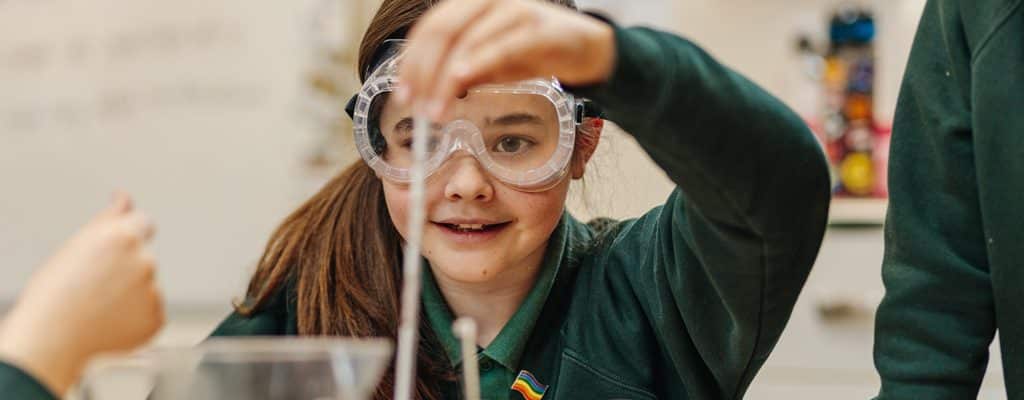
Our Science curriculum aims to give all children a strong understanding of the world around them whilst acquiring specific skills and knowledge to help them to think scientifically, to gain an understanding of scientific processes and also an understanding of the uses and implications of Science, today and for the future.
As one of the core subjects taught in Primary Schools, we give the teaching and learning of Science the prominence it requires. The children are exposed to a wide variety of topics which fall under the three main disciplines of biology, chemistry and physics. The biological thread of plants, animals and humans runs across all year groups; building and developing children’s understanding as they move through the school. This begins with identification of animals and their habitats, and progresses to food chains, life cycles and environmental impacts upon the natural world. Children are also taught in detail about the human body, its processes and how it functions. The chemistry and physics units cover a broad spectrum of topics including space, forces, state of matter, light and electricity among others. As with our whole school curriculum, we will make meaningful links where appropriate. For science these links may be with the study of our local area, geography, design technology or PSHE.
How we teach science
Within the disciplines of science we have identified the ‘big ideas’ (or threshold concepts) that help children to link old learning to new learning. These big ideas are:
| BIOLOGY | CHEMISTRY | PHYSICS |
| Plants Animals and humans Living things Evolution and inheritance | Materials (incl. rocks and soils and states of matter) | Movement, forces and magnets Light and seeing Sound and hearing Electricity Earth in space |
Our science lessons aim to be practical and interactive, teaching knowledge through using and applying the skills of scientific enquiry, enabling children to ask and answer scientific questions with confidence and accuracy. Specialist vocabulary for topics is taught and built up, and effective questioning to communicate ideas is encouraged. Science units/lessons are based around problems or questions that need solving or answering scientifically. Our ‘big ideas’ of scientific enquiry are:
| Working scientifically |
|
What will my child learn in science?
To ensure children ‘catch up’ following the disruption of the Coronavirus pandemic our 2-year cycle has been revised to revisit any missed content. Units will start with recap and revision to ensure that children are secure in essential prior knowledge before moving on. This is a working document that will be reviewed and evaluated throughout the cycle of learning.