Behaviour & Attitudes
Our vision, ‘Aim High - Believe - Succeed’, underpins everything we do.
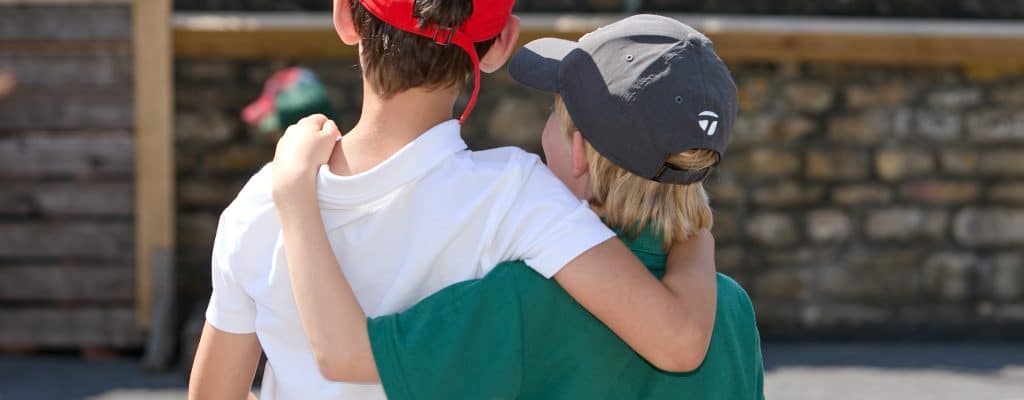
Everyone at St Julian’s Church School has the right to be able to work and play together in a supportive and happy community. We want all our children to develop and learn to the best of their ability. We believe that children learn best when their basic needs (physiological requirements and feeling safe) and their psychological needs (their sense of belonging and accomplishment) are met before we address their cognitive needs. This includes learning about their behaviour and emotions.
Everything we do in school is informed by the Christian values that permeate all aspects of our school life. As a Church of England School, we identify Christian values that underpin the whole of our community. These values inform our school’s vision, aims and ethos, the design of our curriculum, all policies, planning and the school’s management and governance. We believe that a clear, shared understanding of the school’s values is a prerequisite for the effectiveness of our Behaviour (Relationships) Procedures and that disagreement and conflict should be dealt with based on the Christian principles of forgiveness, reconciliation and restorative justice.
Our approach to behaviour management is based upon the principles of the Thrive approach. This aims to build upon promoting and enabling children’s self-regulation and resilience in order for them to be able to increase their own capacity for ‘internally regulating’ their own behaviours based upon the emotions they experience. This requires all adults in school to make time to get to know the children as individuals, teach empathy, and be clear and consistent in our expectations and boundaries. In the Thrive approach we use a developmental model to help us understand how we develop socially and emotionally from birth through to adulthood. This model gives us a framework for understanding what healthy child development looks like in terms of behaviour and learning, and clarifies what the role of adults should be in facilitating a child’s development at each of the different stages. In addition, the model gives us a lens through which to look at and interpret children’s behaviour, enabling us to identify the particular developmental needs being signalled by their behaviour and to choose appropriate, targeted interventions designed to meet those needs if appropriate.
At St Julian’s Church School, we will always look to recognise and reward positive behaviour against our behaviour expectations. This not only reinforces the behaviours but it also helps to build pride and self-esteem in our children. Recognition includes:
- Positive Praise – this includes both verbal and written comments
- Visit Another Member of Staff – a pupil may be asked to celebrate their achievements with another member of staff
- Celebration with Class – a teacher may choose to praise and positively recognise a child in front of a group or class of children (always taking into consideration whether this is a suitable form of praise for the individual child)
- Stickers – a reward sticker (or stamp) may be given for particularly good work and/or behaviour by a class, group or individual child
- House Points – these are given out readily and are recorded on Class Dojo
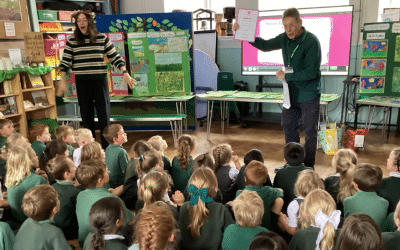
- Celebration Assemblies – pupils from every class receive an individualised certificate at a special end of week assembly recognising children for using and applying a Core Value (value leaf), achieving academically (achievement certificate) and going above and beyond with their learning, attitude and/or effort (star of the week certificate)
- Public Display of Work – teachers may choose to display work within their classroom
- Positive Feedback to Parents – this could be communicated verbally at the end of the day, a written note home, a message on Class Dojo or a phone call home
- Headteacher Awards – a visit to Miss Mills’ office, a sticker or a special certificate
To read the policy in full, please click the links below.